DevOps Certification and Career Guide: How to Choose the Best DevOps Training
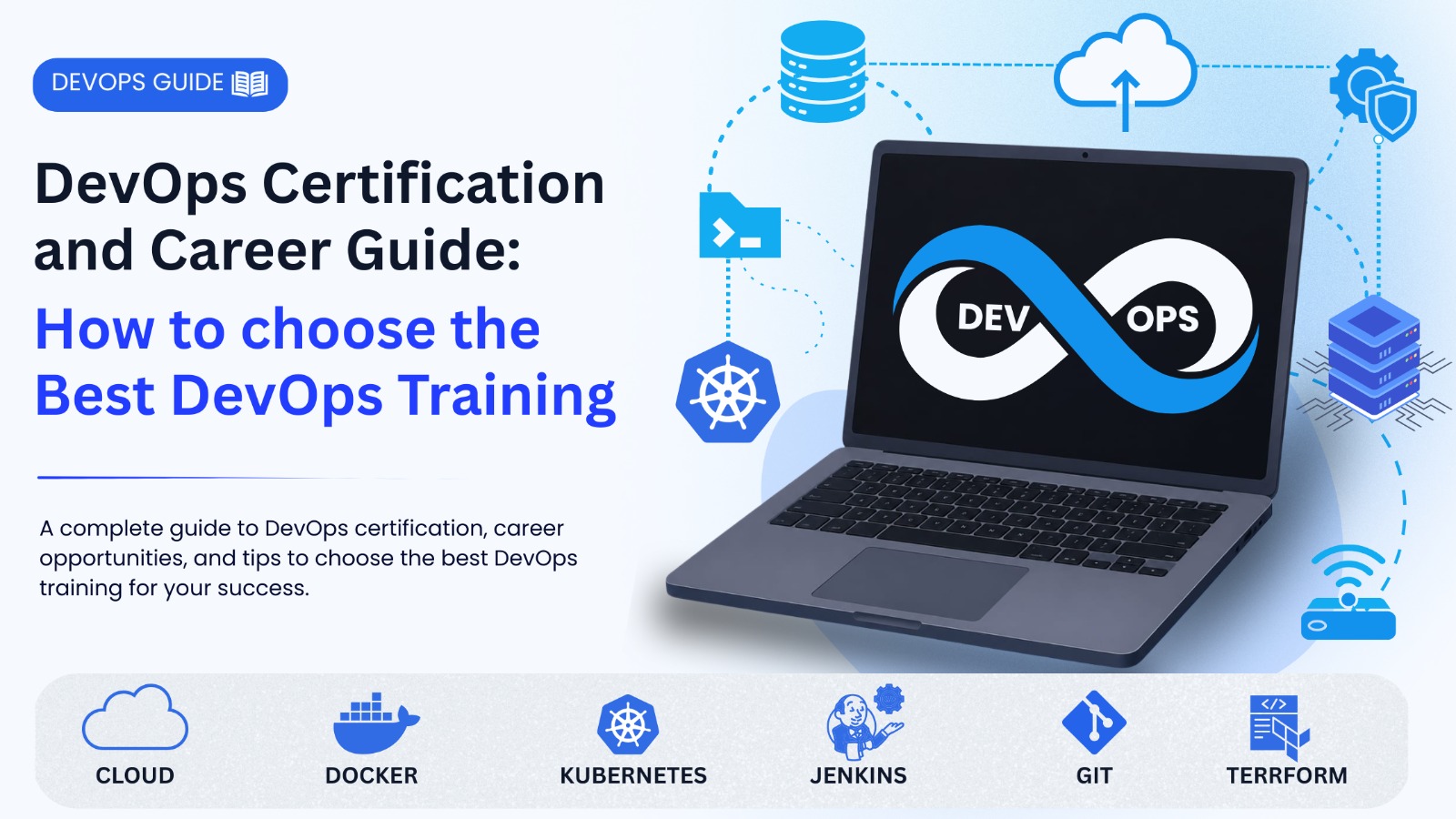
The demand for skilled DevOps professionals continues to grow as organizations adopt faster and more reliable software delivery practices. Whether you are a student, fresher, software developer, or IT professional, understanding the right learning path can help you build a successful career. This DevOps Certification and Career Guide explains everything you need to know about certifications, career opportunities, and how to choose the Best DevOps training for your goals.
Why
Follow a DevOps Certification and Career Guide?
DevOps combines development and IT
operations to improve collaboration, automate workflows, and deliver software
efficiently. Companies across industries are actively hiring professionals with
DevOps skills because automation and cloud technologies have become essential
for modern businesses.
A structured DevOps Certification
and Career Guide helps you understand which tools to learn, which
certifications add value to your resume, and how to prepare for real-world
projects. Instead of learning random technologies, you follow a practical
roadmap that builds both theoretical knowledge and hands-on experience.
Popular DevOps skills include:
- Linux Administration
- Git and GitHub
- Docker
- Kubernetes
- Jenkins
- CI/CD Pipelines
- Terraform
- Ansible
- AWS, Azure, or Google Cloud
- Monitoring tools like Prometheus and Grafana
Learning these technologies in the
right sequence makes your transition into DevOps much easier.
How
to Choose the Best DevOps Training
Finding the Best DevOps training
is just as important as choosing the right certification. A quality training
program should focus on practical implementation instead of only theoretical
concepts.
Before enrolling, look for these
features:
Industry-Relevant
Curriculum
The course should cover the latest
DevOps tools, cloud platforms, containerization, infrastructure automation,
monitoring, and deployment strategies that companies currently use.
Hands-on
Projects
Practical experience is what
employers value the most. Training should include real-world projects, CI/CD
implementation, Docker containerization, Kubernetes deployment, and cloud
infrastructure exercises.
Expert
Mentorship
Learning from experienced DevOps
engineers helps you understand industry best practices and avoid common
mistakes during implementation.
Placement
Support
The Best DevOps training
programs often provide resume building, interview preparation, mock interviews,
and career guidance to improve your chances of landing a job.
Career
Opportunities After DevOps Certification
Completing a recognized
certification and gaining practical experience can open multiple career
opportunities. Entry-level professionals often begin as Junior DevOps Engineers
or Cloud Support Engineers before moving into advanced positions.
Some popular job roles include:
DevOps
Engineer
Responsible for automating
deployments, managing CI/CD pipelines, and improving software delivery
processes.
Cloud
Engineer
Focuses on deploying and managing
cloud infrastructure using platforms like AWS, Azure, or Google Cloud.
Site
Reliability Engineer (SRE)
Ensures applications remain
reliable, scalable, and highly available through automation and monitoring.
Platform
Engineer
Builds internal platforms that help
development teams deploy applications efficiently and securely.
With experience, professionals can
advance into roles such as DevOps Architect, Cloud Architect, Infrastructure
Manager, or Engineering Manager.
Conclusion
Choosing the right learning path
begins with a clear DevOps Certification and Career Guide and selecting
the Best DevOps training that emphasizes hands-on practice, real
projects, and current industry tools. Certifications strengthen your
professional profile, while practical experience prepares you for real
workplace challenges. By continuously improving your skills and working on live
projects, you can build a rewarding career in one of the fastest-growing fields
in the IT industry.